

Key Figures 2024
Our Contribution to REACH and CLP Processes.
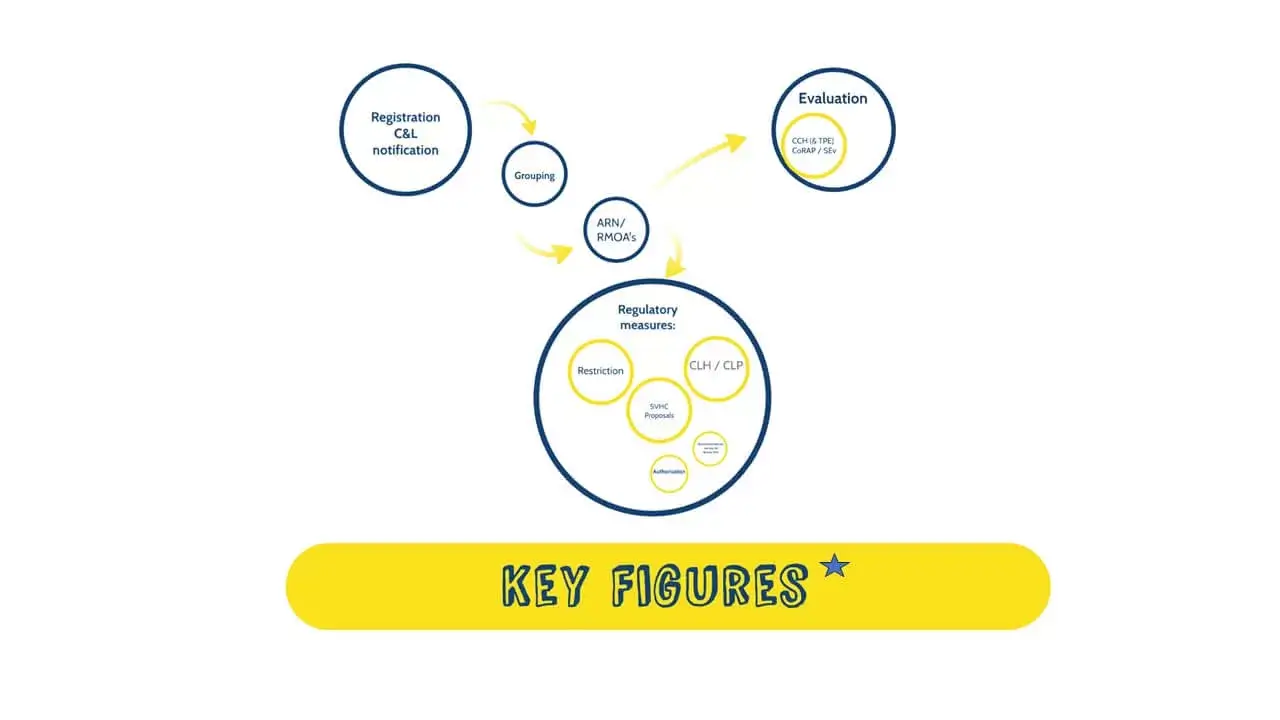
The Netherlands contributes in various ways to the assessment and decision-making processes under the European chemicals regulations REACH and CLP. Bureau REACH coordinates in close collaboration with the relevant ministries to determine which dossiers the Netherlands will prepare. The type and number of products to be delivered each year are agreed upon in the work programme.
The preparation and assessment of dossiers, followed by decision-making procedures under REACH often take more than a year to complete. This means that the work the Netherlands carries out in this context is spread over multiple years. The key figures indicate which dossiers and processes have been at scope in 2024 and which were finalized, in comparison to what was planned for in the work programme. This includes dossiers submitted or commented on by the Netherlands.
The contributions of Dutch members of RAC or SEAC, in the form of (co-)rapporteur ships, are also included. They provide input on all dossiers, often with support of other RIVM experts.
Dossier Evaluation
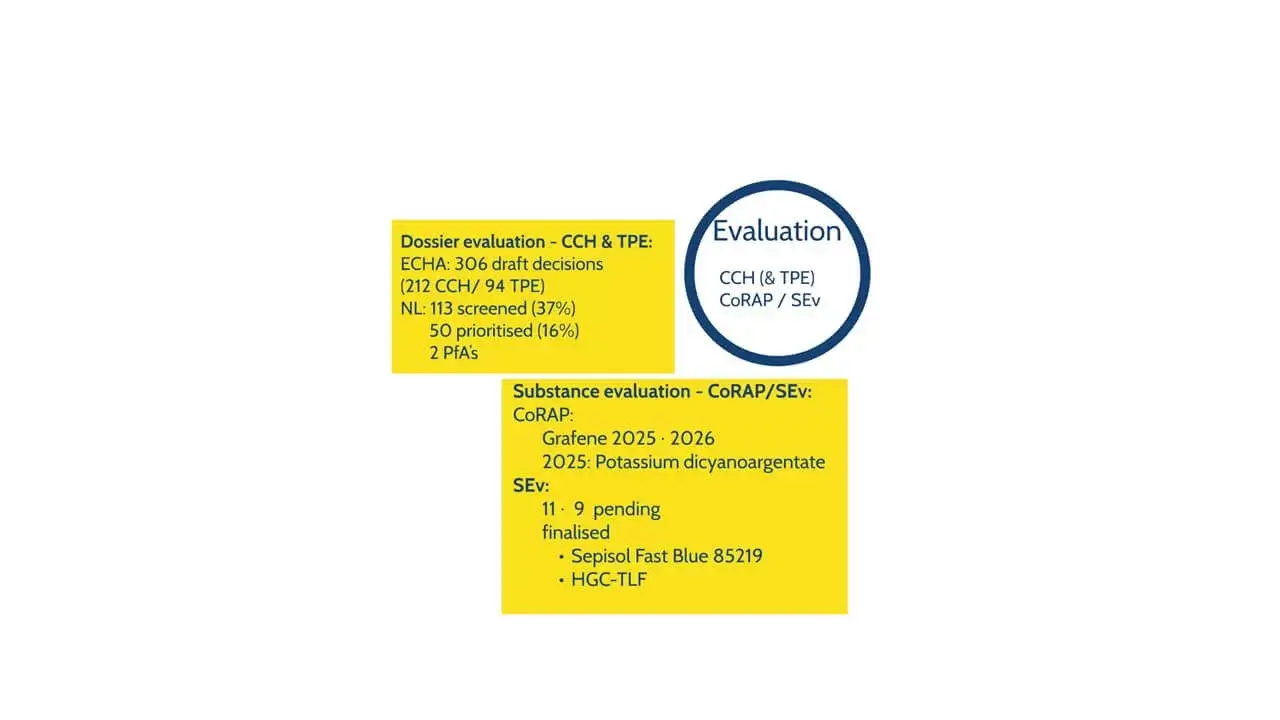
In 2024, ECHA issued 306 draft decisions following dossier evaluations (compliance checks (CCH) and testing proposal evaluations (TPE)). Bureau REACH selected 113 of these draft decisions for content screening. Based on this screening, 50 draft decisions were prioritized and assessed in detail for the preparation of discussion in ECHA’s Member State Committee. The Netherlands submitted two formal proposals for amendment (PfAs), aimed at substantially modifying the decisions with the required tests. Other findings were shared informally with ECHA.
The guiding principle is to request the most appropriate tests and to ensure that the required (animal) studies are conducted in accordance with the appropriate test guidelines, with the most complete and efficient experimental setup as possible.
Substance Evaluation
Bureau REACH worked on 8 of the 11 ongoing substance evaluations and completed 2 of them: the colorant Sepisol Fast Blue 85219 and the PFAS compound HGC-TLF. In 2024, the Netherlands did not add any new substance evaluations to the Community Rolling Action Plan (CoRAP). For the coming years, the substances potassium dicyanoargentate (2025) and a graphene compound (2026) are scheduled for evaluation by the Netherlands on the CoRAP. In addition, Bureau REACH reviewed all 7 draft decisions received from ECHA regarding substance evaluations carried out by other Member States.
Screening
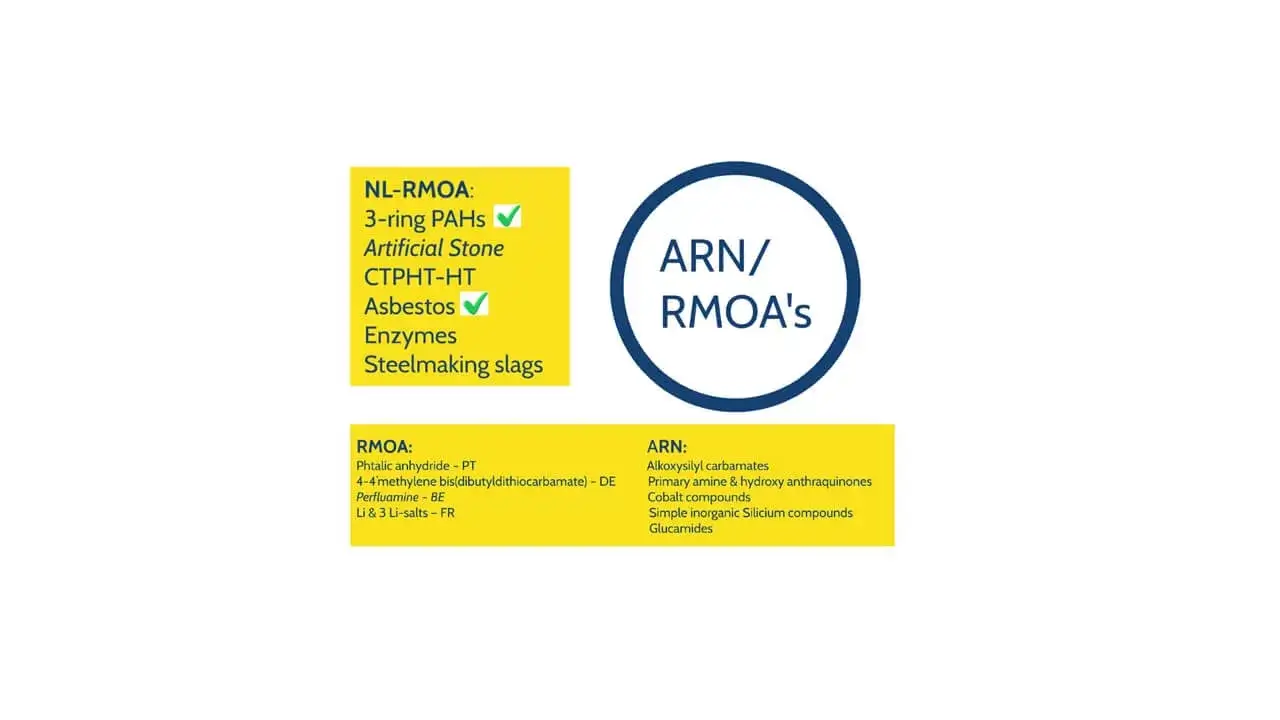
This refers to the screening work carried out to identify candidates for regulatory action (substance evaluation, harmonized classification, authorization or restriction). In 2024, ECHA shared 53 documents related to the screening of substance groups for regulatory needs (so-called Assessment of Regulatory Needs - ARNs) with the Member States. Bureau REACH conducted an in-depth screening for five of these substance groups and submitted comments on the corresponding ARNs to ECHA.
Regulatory Management Option Analysis (RMOA)
An Regulatory Management Option Analysis (RMOA) assesses and identifies the most appropriate regulatory measures for a specific substance or substance group. These options are discussed with ministries, experts from other Member States, and ECHA (see animation elsewhere on this page). Bureau REACH worked on five RMOAs, two of which were completed in 2024. One of these concerned the RMOA for (non-intentionally added) asbestos, as part of the restriction proposal that Bureau REACH is working on (see “Restriction”).
For an RMOA completed in 2023, a follow-up meeting was held with industry. Additionally, four RMOAs were received from other Member States, of which three were commented on by the Netherlands.
Substances of Very High Concern (SVHCs)
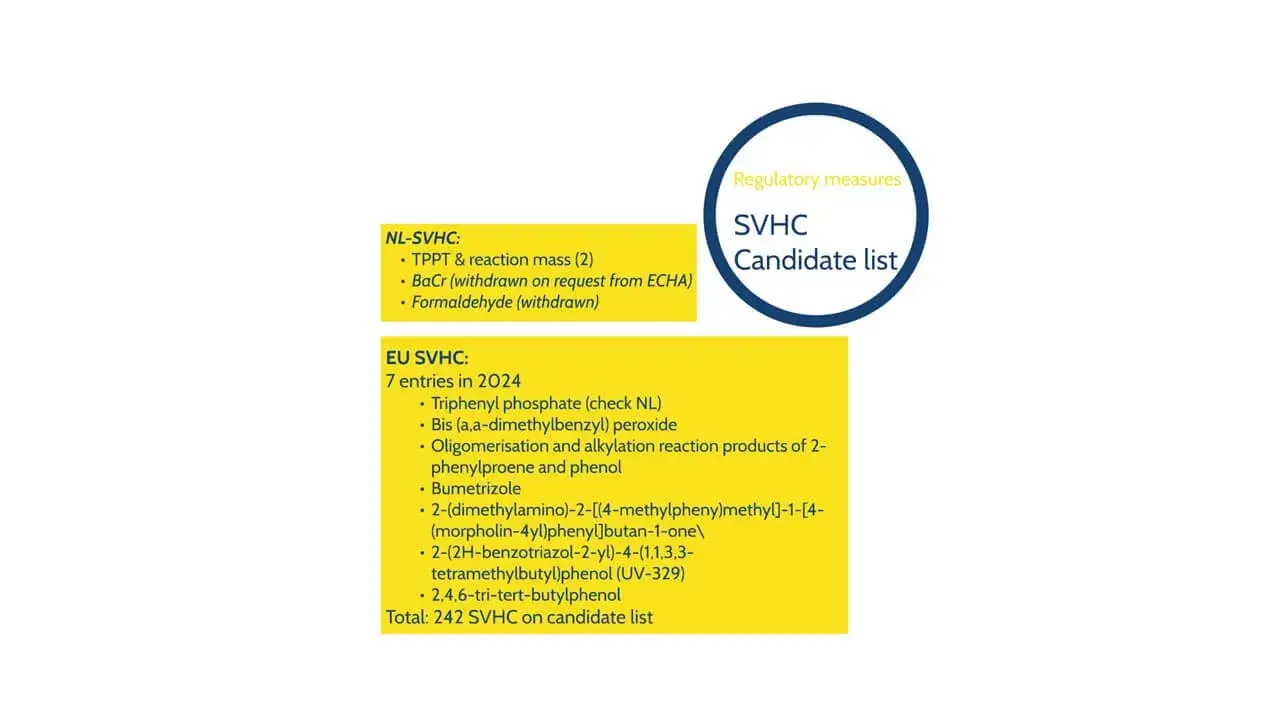
In 2024, the Netherlands submitted two Annex XV SVHC dossiers. Initial steps were taken to prepare SVHC dossiers for both barium chromate and formaldehyde, but it was ultimately decided to discontinue these efforts, as the risks are already sufficiently addressed by (upcoming) restriction measures.
Seven new substances of very high concern were added to the Candidate List in 2024. Of these, one was reviewed by the Netherlands due to its suspected endocrine-disrupting properties, and it was concluded that we agree with its inclusion.
With the addition of new hazard classes under CLP, it is expected that the focus in 2025 will shift from SVHC dossiers to CLH dossiers.
Authorization Requests
The Dutch members of RAC and SEAC contributed to all 43 opinions related to authorization requests for the use of SVHC substances. In some cases, they were supported by other experts from RIVM.
The tasks related to authorization requests are difficult to quantify. Authorization applications typically cover one to three uses, each requiring a separate opinion. For efficiency reasons, ECHA often clusters applications into groups of similar requests, which are then handled by the same rapporteurs.
By the end of 2024, three rapporteur ships have been initiated within SEAC.

Restriction
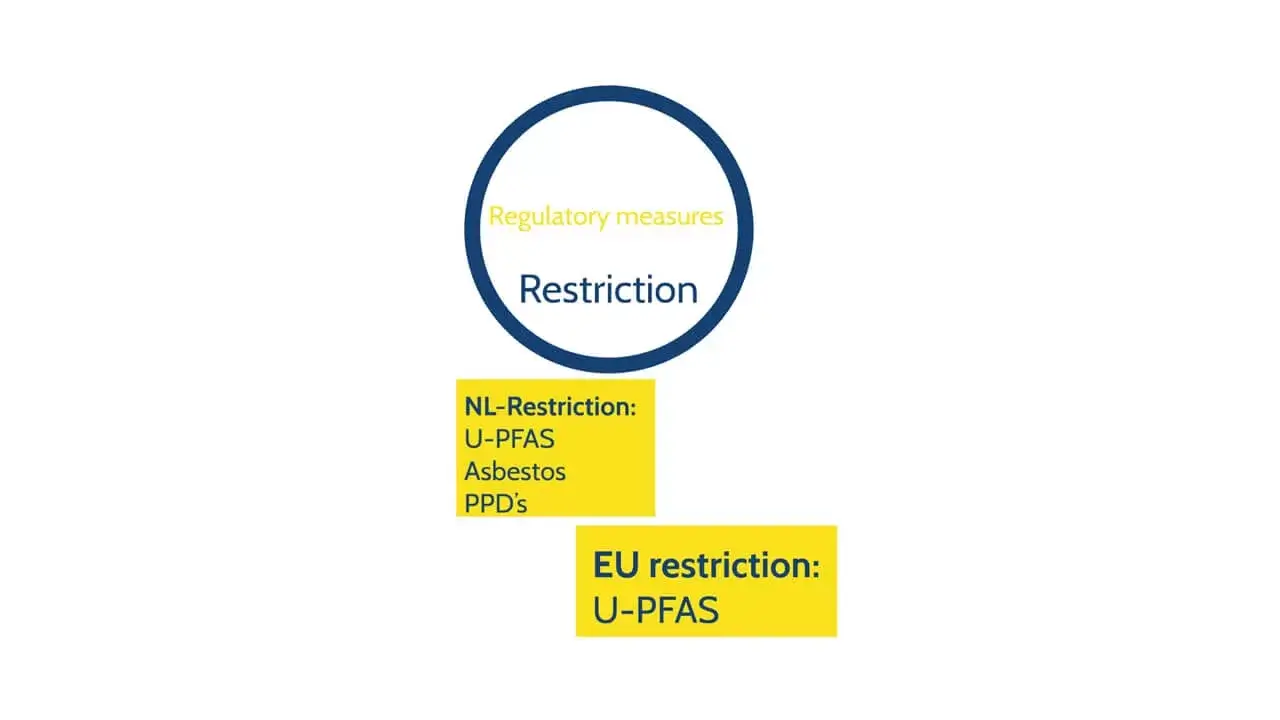
Both the PFAS restriction team and the Dutch RAC and SEAC members made substantial contributions in 2024 to the scientific evaluation and decision-making process of the so-called universal restriction dossier for PFAS (U-PFAS).
In addition, Bureau REACH is working on the restriction proposal for (non-intentionally added) asbestos and has started preparations for a restriction proposal, in collaboration with experts from Austria, to develop a dossier aimed at managing the risks of toxic antioxidants (PPDs) in rubber tyres.
Harmonized Classification & Labelling
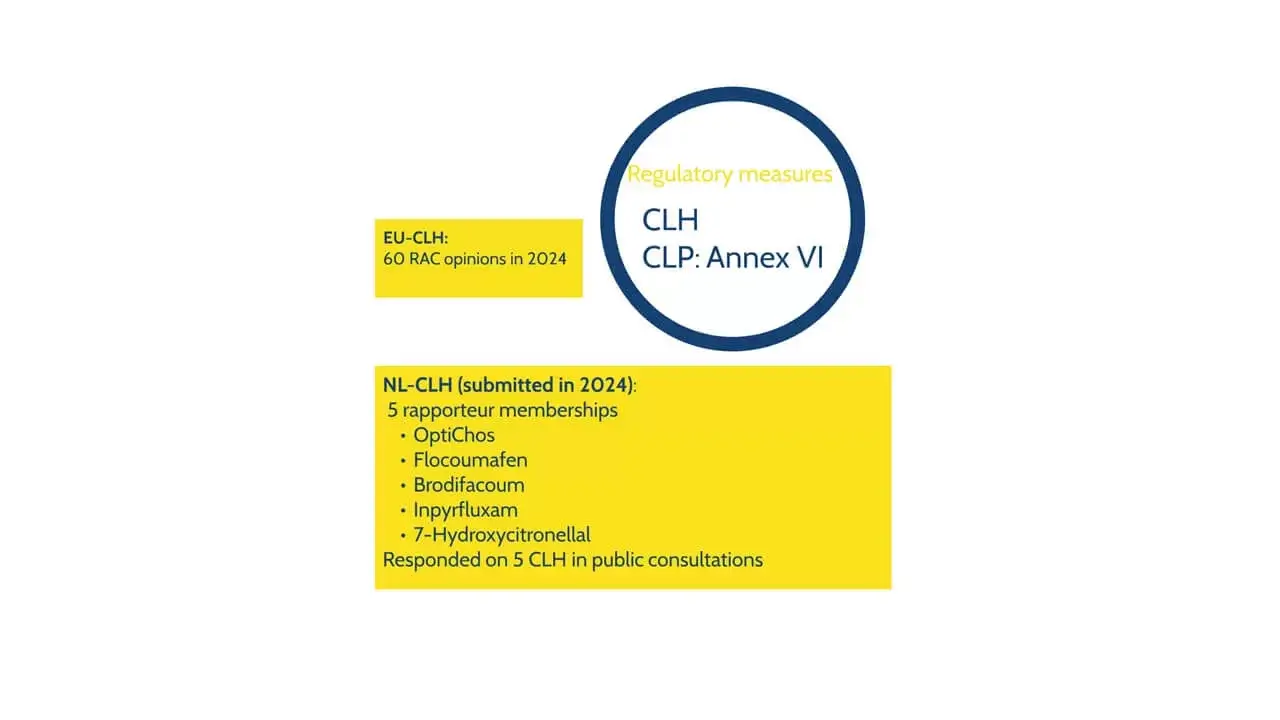
In 2024, five harmonized classification proposals were submitted. Additionally, Dutch RAC members, supported by RIVM advisors, acted as rapporteurs for five dossiers. They also contributed both on the spot in the respective meetings and in writing to all 60 opinions on harmonizedclassification proposals submitted by other European countries.
Bureau REACH also reacted to five proposals for harmonized classification and labelling from other Member States during the public consultation phase.
REACH & CLP Helpdesk
In 2024, the REACH and CLP Helpdesk received and responded to 525 inquiries. This indicates that the number of questions has stabilised and is comparable to previous years.